

Imagine waking up to the intoxicating aroma of caramelized gochujang mingling with perfectly cooked eggs—it’s the kind of breakfast that transforms your entire morning. Spicy Gochujang Eggs have become my go-to meal when I need something quick, flavorful, and utterly satisfying. This Korean-inspired dish combines the deep, fermented heat of gochujang with the creamy richness of eggs, creating a harmonious balance that dances on your palate.
What makes this recipe truly special is its simplicity. With just a handful of ingredients and minimal cooking time, you’ll create a restaurant-worthy breakfast that feels indulgent yet nourishing. Whether you’re new to Korean cuisine or a devoted fan, these spicy gochujang eggs will quickly earn a permanent spot in your breakfast rotation.
Ingredients List
For the Sauce:
- 2 tablespoons gochujang (Korean red chili paste)
- 1 tablespoon soy sauce (or tamari for gluten-free)
- 1 teaspoon sesame oil
- 1 teaspoon honey or maple syrup
- 1 clove garlic, minced
For the Eggs:
- 4 large eggs
- 1 tablespoon neutral cooking oil (vegetable, canola, or avocado)
- 2 green onions, thinly sliced
- 1 teaspoon toasted sesame seeds
- Fresh cilantro for garnish (optional)
Substitution Suggestions:
- Use coconut aminos instead of soy sauce for a soy-free version
- Swap eggs for extra-firm tofu scramble for a vegan alternative
- Replace honey with agave nectar for a fully plant-based option
- Try gochugaru (Korean chili flakes) mixed with miso paste if gochujang isn’t available
Timing
Preparation Time: 5 minutes
Cooking Time: 8 minutes
Total Time: 13 minutes
This recipe is perfect for busy mornings when you need something fast but flavorful. While your pan heats, you can prep the sauce—a smart time-saver that keeps everything flowing smoothly. The entire dish comes together in less than 15 minutes, making it ideal for weekday breakfasts or lazy weekend brunches. You can even prepare the gochujang sauce the night before and store it in the refrigerator, shaving off precious morning minutes.
How to Make It
1. Prepare the Gochujang Sauce
In a small bowl, whisk together the gochujang, soy sauce, sesame oil, honey, and minced garlic until smooth and well combined. The mixture should have a thick, glossy consistency that clings to a spoon. This sauce is the heart of your dish, so take a moment to taste and adjust—add more honey if you prefer it sweeter, or an extra splash of soy sauce for deeper umami flavor.
2. Heat Your Pan
Place a non-stick or well-seasoned cast-iron skillet over medium heat and add your cooking oil. Let it warm for about a minute until it shimmers but doesn’t smoke. The right temperature is crucial—too hot and your eggs will brown too quickly; too cool and they’ll stick and steam rather than fry beautifully.
3. Cook the Eggs
Crack your eggs directly into the pan, keeping them slightly separated if you prefer individual portions. Let them cook undisturbed for about 2-3 minutes until the whites are set but the yolks remain gloriously runny. If you prefer firmer yolks, cover the pan with a lid for an additional minute or carefully flip them for over-easy eggs. Listen for that gentle sizzle—it’s your signal that everything’s cooking perfectly.
4. Add the Spicy Sauce
Once your eggs are nearly done, drizzle the gochujang sauce generously over and around them. Let the sauce warm and bubble slightly at the edges, about 30 seconds. This brief heating mellows the raw garlic and allows the flavors to meld beautifully with the eggs. The sauce will perfume your kitchen with an irresistible sweet-spicy aroma.
5. Garnish and Serve
Slide your spicy gochujang eggs onto a warm plate and immediately sprinkle with sliced green onions and toasted sesame seeds. Add fresh cilantro if you’re a fan of its bright, citrusy notes. The contrasting textures—silky egg, sticky sauce, crunchy seeds—make every bite a delightful experience.
Nutritional Information
Per Serving (2 eggs with sauce):
- Calories: approximately 240
- Protein: 13g
- Fat: 16g
- Carbohydrates: 10g
- Fiber: 1g
- Sodium: 680mg
These spicy gochujang eggs deliver high-quality protein from the eggs, which helps keep you satisfied throughout the morning. Gochujang brings beneficial probiotics from the fermentation process, while sesame oil provides healthy fats. The dish offers B vitamins, selenium, and choline—all important nutrients for brain function and energy metabolism. Keep in mind that nutritional values may vary based on specific brands and portion sizes you use.
Healthier Alternatives for the Recipe
Lower Sodium Option: Use reduced-sodium soy sauce and reduce the gochujang to 1 tablespoon, supplementing with a pinch of smoked paprika for color and mild heat.
Lighter Version: Use only egg whites or a combination of whole eggs and whites to reduce calories and cholesterol while maintaining protein content. The texture will be slightly less rich but still delicious.
Gluten-Free Adaptation: Ensure your gochujang is certified gluten-free (some brands contain wheat) or make your own. Use tamari instead of regular soy sauce.
Vegan Alternative: Replace eggs with seasoned tofu scramble made from crumbled extra-firm tofu. The gochujang sauce works beautifully with plant-based proteins, delivering the same bold flavor profile.
Blood Sugar Friendly: Skip the honey entirely or use a sugar-free sweetener. The natural sweetness of gochujang will still shine through, though the sauce will have a slightly sharper edge.

Serving Suggestions
Serve your spicy gochujang eggs over a bowl of warm, fluffy white or brown rice for a traditional Korean breakfast that’s deeply comforting. The runny yolk mixes with the rice to create a creamy, luxurious texture.
For a lighter option, pair them with steamed vegetables like bok choy, spinach, or roasted asparagus. The clean, fresh flavors balance the rich, spicy sauce beautifully.
Toast lovers can place these eggs atop thick-cut sourdough or whole grain bread, creating an elevated version of eggs on toast with international flair.
Add a side of kimchi for authentic Korean breakfast vibes—the tangy fermented cabbage cuts through the richness and adds probiotic benefits.
Consider serving with sliced avocado, pickled radishes, or a simple cucumber salad dressed with rice vinegar for refreshing contrast.
A cup of green tea or barley tea makes an excellent beverage pairing, cleansing your palate between bites.
Common Mistakes to Avoid
Overcooking the Eggs: The beauty of this dish lies in the contrast between creamy yolks and spicy sauce. Watch your eggs carefully and remove them from heat while the yolks are still slightly jiggly in the center—they’ll continue cooking from residual heat.
Using Cold Eggs: Room-temperature eggs cook more evenly and are less likely to stick to the pan. Take them out of the refrigerator about 15 minutes before cooking.
Burning the Garlic in the Sauce: Since you’re mixing raw garlic into the sauce rather than cooking it separately, make sure it’s minced very finely. Large chunks can taste harsh and overpowering.
Adding Sauce Too Early: Wait until your eggs are nearly finished before adding the gochujang mixture. Adding it too soon can cause the sauce to burn and turn bitter.
Skimping on Oil: A proper amount of oil creates that lacy, crispy edge on your eggs while preventing sticking. Don’t be shy—the eggs should sizzle when they hit the pan.
Not Tasting the Sauce: Gochujang brands vary in heat level and saltiness. Always taste your sauce before adding it to the eggs so you can adjust seasonings to your preference.
Storing Tips for the Recipe
Gochujang Sauce Storage: The sauce keeps beautifully in an airtight container in the refrigerator for up to one week. This makes meal prep incredibly easy—just cook fresh eggs each morning and drizzle with pre-made sauce.
Cooked Eggs: While eggs are best enjoyed fresh, you can refrigerate fully cooked spicy gochujang eggs in an airtight container for up to 2 days. The yolks will firm up, but the flavors remain delicious.
Reheating Instructions: Gently reheat in a non-stick pan over low heat with a splash of water, covered, for about 2 minutes. Alternatively, microwave for 30-45 seconds, though this method can make eggs rubbery if overdone.
Make-Ahead Strategy: Prepare your sauce in advance and store it separately. Cook eggs fresh each morning for the best texture and flavor. This compromise gives you convenience without sacrificing quality.
Freezing: I don’t recommend freezing cooked eggs as they become watery and rubbery when thawed. However, the gochujang sauce freezes well for up to 3 months in small portions.
Conclusion
These spicy gochujang eggs prove that breakfast doesn’t have to be complicated to be extraordinary. With minimal ingredients, simple techniques, and bold Korean flavors, you’ll create a morning meal that energizes both your body and your taste buds. The beautiful thing about this recipe is how adaptable it is—adjust the heat level, swap proteins, or change up the accompaniments to make it uniquely yours.
Don’t let the unfamiliar ingredient intimidate you. Once you experience that perfect bite of creamy egg coated in sweet, spicy, umami-rich sauce, you’ll understand why this dish has captured hearts around the world. Your weekday mornings are about to get so much more exciting.
Grab your pan, crack those eggs, and treat yourself to a breakfast that’s as bold as you are. I’d love to hear how your spicy gochujang eggs turn out—share your creations and any creative twists you discover along the way.
Frequently Asked Questions
Can I make this recipe less spicy?
Absolutely. Reduce the gochujang to 1 tablespoon and add an extra teaspoon of honey to balance the heat. You can also mix in a tablespoon of ketchup or tomato paste to mellow the spice while maintaining the sauce’s body and color.
What can I use if I don’t have gochujang?
Try mixing 1 tablespoon of miso paste with 1 teaspoon of sriracha and a pinch of sugar. While it won’t perfectly replicate gochujang’s complex fermented flavor, it creates a similar sweet-spicy profile that works beautifully with eggs.
How do I know when the eggs are perfectly cooked?
The whites should be completely set and opaque with no translucent areas, while the yolks should still jiggle slightly when you gently shake the pan. This typically takes 3-4 minutes over medium heat for sunny-side-up eggs.
Can I meal prep this recipe?
The gochujang sauce is perfect for meal prep and lasts a week in the refrigerator. However, eggs are best cooked fresh each day. The good news is that with pre-made sauce, the entire dish takes less than 10 minutes from start to finish.
Is gochujang gluten-free?
Traditional gochujang often contains wheat or barley, but many brands now offer certified gluten-free versions. Always check the label, or look for products specifically marked as gluten-free to ensure they’re safe for celiac or gluten-sensitive diets.
What’s the best way to store leftover gochujang?
Transfer opened gochujang to an airtight container and refrigerate. It keeps for several months due to its fermented nature and high salt content. A thin layer of oil on top can help prevent oxidation and maintain freshness even longer.
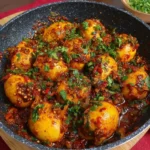
Spicy Gochujang Eggs Recipe for a Bold Korean Breakfast
- Total Time: 13 minutes
- Yield: 4 servings 1x
Description
What makes this recipe truly special is its simplicity. With just a handful of ingredients and minimal cooking time, you’ll create a restaurant-worthy breakfast that feels indulgent yet nourishing. Whether you’re new to Korean cuisine or a devoted fan, these spicy gochujang eggs will quickly earn a permanent spot in your breakfast rotation.
Ingredients
For the Sauce:
- 2 tablespoons gochujang (Korean red chili paste)
- 1 tablespoon soy sauce (or tamari for gluten-free)
- 1 teaspoon sesame oil
- 1 teaspoon honey or maple syrup
- 1 clove garlic, minced
For the Eggs:
- 4 large eggs
- 1 tablespoon neutral cooking oil (vegetable, canola, or avocado)
- 2 green onions, thinly sliced
- 1 teaspoon toasted sesame seeds
- Fresh cilantro for garnish (optional)
Substitution Suggestions:
- Use coconut aminos instead of soy sauce for a soy-free version
- Swap eggs for extra-firm tofu scramble for a vegan alternative
- Replace honey with agave nectar for a fully plant-based option
- Try gochugaru (Korean chili flakes) mixed with miso paste if gochujang isn’t available
Instructions
In a small bowl, whisk together the gochujang, soy sauce, sesame oil, honey, and minced garlic until smooth and well combined. The mixture should have a thick, glossy consistency that clings to a spoon. This sauce is the heart of your dish, so take a moment to taste and adjust—add more honey if you prefer it sweeter, or an extra splash of soy sauce for deeper umami flavor.
Place a non-stick or well-seasoned cast-iron skillet over medium heat and add your cooking oil. Let it warm for about a minute until it shimmers but doesn’t smoke. The right temperature is crucial—too hot and your eggs will brown too quickly; too cool and they’ll stick and steam rather than fry beautifully.
Crack your eggs directly into the pan, keeping them slightly separated if you prefer individual portions. Let them cook undisturbed for about 2-3 minutes until the whites are set but the yolks remain gloriously runny. If you prefer firmer yolks, cover the pan with a lid for an additional minute or carefully flip them for over-easy eggs. Listen for that gentle sizzle—it’s your signal that everything’s cooking perfectly.
Once your eggs are nearly done, drizzle the gochujang sauce generously over and around them. Let the sauce warm and bubble slightly at the edges, about 30 seconds. This brief heating mellows the raw garlic and allows the flavors to meld beautifully with the eggs. The sauce will perfume your kitchen with an irresistible sweet-spicy aroma.
Slide your spicy gochujang eggs onto a warm plate and immediately sprinkle with sliced green onions and toasted sesame seeds. Add fresh cilantro if you’re a fan of its bright, citrusy notes. The contrasting textures—silky egg, sticky sauce, crunchy seeds—make every bite a delightful experience.
Nutrition
- Calories: 240
- Sodium: 680mg
- Fat: 16g
- Carbohydrates: 10g
- Fiber: 1g
- Protein: 13g