

There’s something almost magical about Thai chicken coconut curry that transforms an ordinary weeknight dinner into a fragrant journey to Southeast Asia. The moment coconut milk meets aromatic curry paste in your pan, your kitchen fills with a symphony of scents that promises pure comfort in a bowl. This Thai chicken coconut curry recipe delivers all the complex flavors you’d expect from your favorite Thai restaurant, but in just 30 minutes from your own kitchen.
The beauty of Thai cuisine lies in its perfect balance of sweet, spicy, salty, and sour flavors, and this curry captures that harmony beautifully. While authentic Thai curries traditionally simmer for hours, this streamlined version uses smart techniques and quality ingredients to achieve that same depth of flavor in record time. The result is a creamy, aromatic curry that’s both satisfying and surprisingly achievable for home cooks of any skill level.
Ingredients
Base Ingredients:
- 1½ lbs boneless, skinless chicken thighs, cut into bite-sized pieces
- 2 tablespoons vegetable oil or coconut oil
- 1 can (14 oz) full-fat coconut milk
- 1 red bell pepper, sliced into strips
- 1 small onion, thinly sliced
- 8 oz baby potatoes, halved (or regular potatoes cut into chunks)
Aromatics and Seasonings:
- 2-3 tablespoons red curry paste (adjust to taste)
- 3 cloves garlic, minced
- 1 inch fresh ginger, grated
- 2 tablespoons fish sauce
- 1 tablespoon brown sugar or palm sugar
- 1 tablespoon lime juice
- 1 teaspoon lime zest
Garnishes and Finishing Touches:
- ¼ cup fresh Thai basil leaves (or regular basil)
- 2 green onions, sliced
- 1 Thai chili, thinly sliced (optional)
- Jasmine rice for serving
- Lime wedges
Substitution Notes: Chicken breast works well but may be less tender than thighs. For dietary restrictions, swap fish sauce with soy sauce for vegetarian versions, or use tamari for gluten-free needs. If Thai basil isn’t available, regular basil provides lovely flavor, though slightly different from the authentic licorice-like notes of Thai basil.
Timing
This Thai chicken coconut curry comes together beautifully in just 30 minutes total. Prep work takes about 10-12 minutes, including chopping vegetables and cutting chicken. The actual cooking time is 18-20 minutes, making it perfect for busy weeknights when you want something special without the fuss.
Start your rice first if serving immediately, as jasmine rice typically needs 15-18 minutes to cook perfectly. While the rice cooks, you can prep all your ingredients and have the curry ready right when the rice finishes. The beauty of this timing means everything comes together seamlessly for a complete meal.
For make-ahead convenience, you can cut vegetables and chicken up to a day in advance, storing them separately in the refrigerator. The curry also reheats beautifully, often tasting even better the next day as flavors continue to meld.
How to Make It
1. Prepare the Base: Heat oil in a large skillet or wok over medium-high heat. Add the chicken pieces in a single layer, seasoning lightly with salt. Cook for 4-5 minutes until golden on one side, then flip and cook another 3-4 minutes. The chicken doesn’t need to be fully cooked at this stage.
2. Build the Aromatic Foundation: Push chicken to one side of the pan and add curry paste to the empty space. Let it sizzle for 30 seconds until fragrant, then add minced garlic and ginger. Stir everything together, coating the chicken in the aromatic paste mixture.
3. Add the Coconut Milk: Pour in the coconut milk, stirring to combine with the curry paste mixture. The sauce should be smooth and well-incorporated. Bring to a gentle simmer, then add the halved potatoes. Let them cook for 8-10 minutes until fork-tender.
4. Incorporate Vegetables: Add the sliced bell pepper and onion to the curry. Simmer for 3-4 minutes until the vegetables are crisp-tender but still have a slight bite. The bell pepper should be vibrant and the onions softened but not mushy.
5. Season and Balance: Stir in fish sauce, brown sugar, lime juice, and lime zest. Taste and adjust seasonings – you want a balance of salty, sweet, and tangy flavors. If you prefer more heat, add sliced Thai chili at this stage.
6. Finish with Fresh Herbs: Remove from heat and stir in most of the Thai basil leaves, reserving some for garnish. The residual heat will wilt the basil perfectly while preserving its bright flavor.
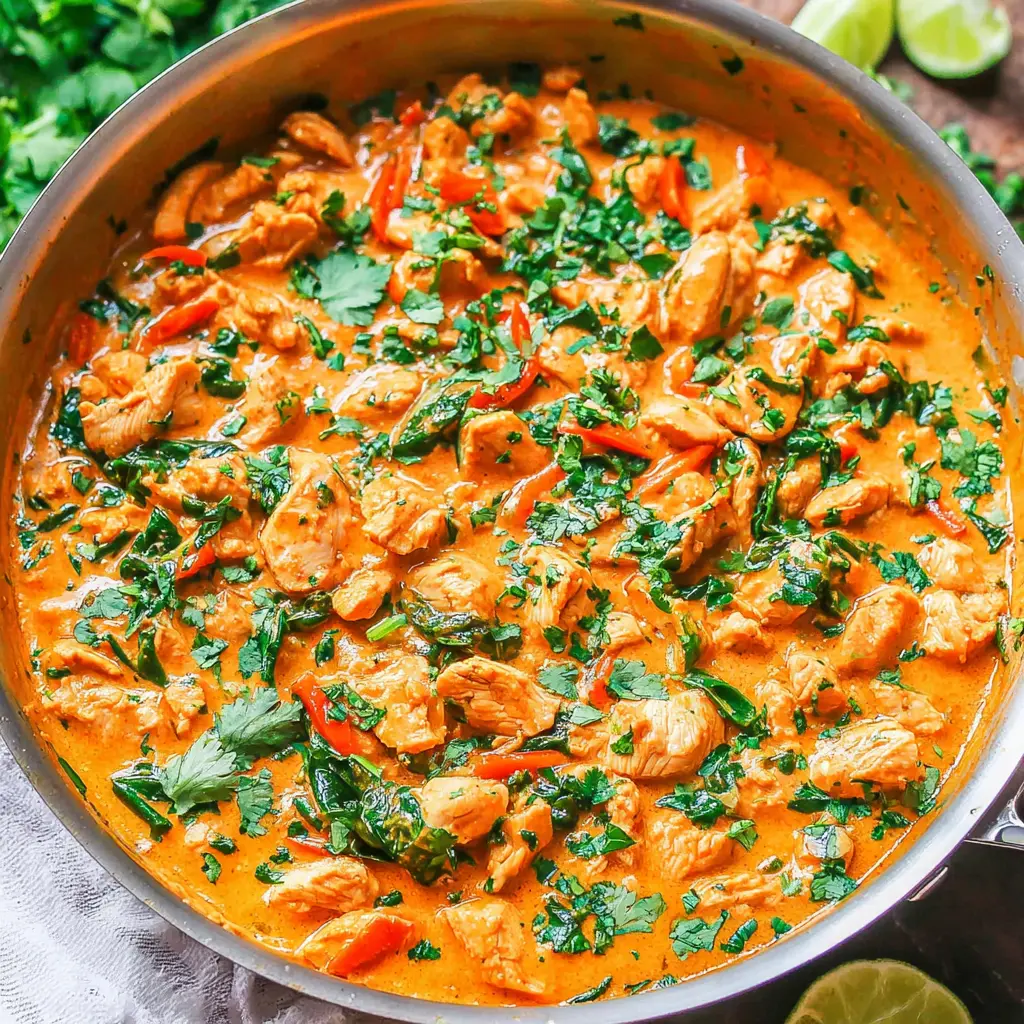
Nutritional Information
Per serving (based on 4 servings), this Thai chicken coconut curry provides approximately 420-450 calories. The dish offers excellent protein from the chicken (about 35-40 grams per serving) and beneficial fats from coconut milk. You’ll also get vitamin C from bell peppers and lime, plus potassium from the potatoes.
The coconut milk provides medium-chain fatty acids, which are easily digestible fats that can provide quick energy. Fresh herbs and spices like ginger, garlic, and Thai basil contribute antioxidants and anti-inflammatory compounds. The curry paste adds capsaicin from chilies, which may boost metabolism naturally.
Keep in mind that coconut milk is calorie-dense, so portion awareness helps if you’re watching caloric intake. The good news is that the protein and fiber content help create satiety, making moderate portions quite satisfying.
Healthier Alternatives for the Recipe
For a lighter version, substitute half the coconut milk with low-sodium chicken broth or coconut milk from a carton (which is typically thinner and lower in calories). This reduces richness slightly but maintains great flavor while cutting calories by about 25%.
Make it dairy-free and lighter by using light coconut milk exclusively, though you’ll want to add a tablespoon of cornstarch mixed with water to maintain some creaminess. For lower carb needs, replace potatoes with cauliflower florets or zucchini chunks, which absorb flavors beautifully.
Boost nutrition by adding vegetables like snap peas, baby corn, or bamboo shoots. These add fiber, vitamins, and interesting textures without significantly changing cooking time. For extra protein without additional calories, consider adding some firm tofu cubes alongside or instead of some chicken.
Serving Suggestions
Serve this aromatic curry over fluffy jasmine rice, which perfectly absorbs the creamy coconut sauce. Brown rice offers more fiber and a nuttier flavor that complements the curry spices beautifully. For lower-carb options, try cauliflower rice or zucchini noodles.
Garnish each bowl with fresh Thai basil, sliced green onions, and a lime wedge for that essential bright acid that balances the rich coconut flavors. A sprinkle of chopped peanuts adds delightful crunch and authentic Thai flair.
Consider serving with traditional Thai sides like cucumber salad or fresh spring rolls as appetizers. Thai iced tea or a crisp white wine like Riesling pairs wonderfully with the spicy, creamy flavors.
Common Mistakes to Avoid
Don’t rush the curry paste step – letting it bloom in the oil for those crucial 30 seconds develops much deeper flavor. Skipping this step results in a flat-tasting curry that lacks the aromatic foundation.
Avoid using light coconut milk if you want authentic richness and flavor. The fat content in full-fat coconut milk is essential for proper texture and taste. However, you can stretch full-fat milk with some broth if desired.
Don’t overcook the vegetables – they should retain some texture and color. Mushy vegetables make the curry less appealing and reduce nutritional value. Add them at the right time and monitor closely.
Never add lime juice too early in the cooking process, as heat can make citrus taste bitter. Always add it at the end for that bright, fresh finish that authentic Thai curry demands.
Storing Tips for the Recipe
Store leftover Thai chicken coconut curry in the refrigerator for up to 3-4 days in airtight containers. The flavors often improve overnight as they have time to meld together, making leftovers particularly delicious.
For reheating, use gentle heat on the stovetop, stirring occasionally and adding a splash of coconut milk or broth if the sauce has thickened too much. Microwave reheating works but stir frequently to prevent separation of the coconut milk.
This curry freezes well for up to 3 months, though the potatoes may become slightly softer after thawing. Consider freezing portions without potatoes if texture is important to you, adding fresh potatoes when reheating.
Always cool completely before refrigerating or freezing, and leave some room in containers for expansion if freezing. Label with the date to track freshness.
Conclusion
This Thai chicken coconut curry proves that incredible flavor doesn’t require hours in the kitchen. With its perfect balance of creamy coconut, aromatic spices, and tender chicken, it delivers restaurant-quality results in just 30 minutes. The recipe’s flexibility means you can adjust spice levels, swap vegetables based on what you have available, and modify it for various dietary needs without sacrificing the authentic Thai flavors that make this dish so special.
Whether you’re introducing your family to Thai cuisine or satisfying your own craving for something exotic and comforting, this curry delivers every time. Give it a try tonight – your kitchen will smell amazing, and your taste buds will thank you for the flavorful adventure.
FAQs
Can I use chicken breast instead of thighs?
Absolutely! Chicken breast works well, though it may be slightly less tender than thighs. Cut it into uniform pieces and be careful not to overcook, as breast meat can become dry more quickly than thighs.
How spicy is this curry, and can I adjust the heat level?
The spice level depends on your curry paste and personal tolerance. Start with 2 tablespoons of red curry paste for mild-medium heat, and adjust up or down based on preference. You can always add more, but you can’t take it out!
What if I can’t find Thai basil?
Regular sweet basil works perfectly fine as a substitute. While Thai basil has a slightly different flavor profile with subtle licorice notes, regular basil still provides that fresh, aromatic finish that makes the curry special.
Can I make this curry ahead of time?
Yes! This curry actually tastes better the next day as flavors develop. Make it completely, cool, and refrigerate. When reheating, add fresh herbs and a squeeze of lime juice to brighten the flavors again.
Is there a vegetarian version of this recipe?
Definitely! Replace chicken with firm tofu, extra vegetables like eggplant or mushrooms, and substitute soy sauce or tamari for the fish sauce. The cooking method remains the same, just adjust cooking times for your protein substitute.
Why did my coconut milk separate or curdle?
This can happen if the heat is too high or if you add acidic ingredients too early. Keep heat at medium-high maximum, and add lime juice at the very end. If separation occurs, whisk vigorously or blend briefly to re-emulsify.

Thai Chicken Coconut Curry Recipe
- Total Time: 30 minutes total
- Yield: 4 servings 1x
Description
There’s something almost magical about Thai chicken coconut curry that transforms an ordinary weeknight dinner into a fragrant journey to Southeast Asia. The moment coconut milk meets aromatic curry paste in your pan, your kitchen fills with a symphony of scents that promises pure comfort in a bowl. This Thai chicken coconut curry recipe delivers all the complex flavors you’d expect from your favorite Thai restaurant, but in just 30 minutes from your own kitchen.
Ingredients
Base Ingredients:
- 1½ lbs boneless, skinless chicken thighs, cut into bite-sized pieces
- 2 tablespoons vegetable oil or coconut oil
- 1 can (14 oz) full-fat coconut milk
- 1 red bell pepper, sliced into strips
- 1 small onion, thinly sliced
- 8 oz baby potatoes, halved (or regular potatoes cut into chunks)
Aromatics and Seasonings:
- 2–3 tablespoons red curry paste (adjust to taste)
- 3 cloves garlic, minced
- 1 inch fresh ginger, grated
- 2 tablespoons fish sauce
- 1 tablespoon brown sugar or palm sugar
- 1 tablespoon lime juice
- 1 teaspoon lime zest
Garnishes and Finishing Touches:
- ¼ cup fresh Thai basil leaves (or regular basil)
- 2 green onions, sliced
- 1 Thai chili, thinly sliced (optional)
- Jasmine rice for serving
- Lime wedges
Instructions
1. Prepare the Base: Heat oil in a large skillet or wok over medium-high heat. Add the chicken pieces in a single layer, seasoning lightly with salt. Cook for 4-5 minutes until golden on one side, then flip and cook another 3-4 minutes. The chicken doesn’t need to be fully cooked at this stage.
2. Build the Aromatic Foundation: Push chicken to one side of the pan and add curry paste to the empty space. Let it sizzle for 30 seconds until fragrant, then add minced garlic and ginger. Stir everything together, coating the chicken in the aromatic paste mixture.
3. Add the Coconut Milk: Pour in the coconut milk, stirring to combine with the curry paste mixture. The sauce should be smooth and well-incorporated. Bring to a gentle simmer, then add the halved potatoes. Let them cook for 8-10 minutes until fork-tender.
4. Incorporate Vegetables: Add the sliced bell pepper and onion to the curry. Simmer for 3-4 minutes until the vegetables are crisp-tender but still have a slight bite. The bell pepper should be vibrant and the onions softened but not mushy.
5. Season and Balance: Stir in fish sauce, brown sugar, lime juice, and lime zest. Taste and adjust seasonings – you want a balance of salty, sweet, and tangy flavors. If you prefer more heat, add sliced Thai chili at this stage.
6. Finish with Fresh Herbs: Remove from heat and stir in most of the Thai basil leaves, reserving some for garnish. The residual heat will wilt the basil perfectly while preserving its bright flavor.
Nutrition
- Calories: 420-450